
12 Worst Breakfast Foods That Spike Blood Sugar (What to Eat Instead for Stable Energy)
The worst breakfast foods that spike blood sugar include sugary cereals, white toast with jam, fruit juice, pancakes with syrup, flavored yogurt, and pastries. These foods digest quickly and cause rapid glucose spikes followed by energy crashes, leaving you exhausted, hungry, and craving sugar well before lunch.
If you wake up exhausted before your day even starts — crashing by 10 AM, craving sugar before lunch, or struggling to focus at work — like many people who wonder why do I feel tired after eating? Most Americans are eating meals that look healthy on the outside but act like dessert inside the body.
The typical American morning plate is stacked with refined carbohydrates, hidden sugars, and processed ingredients that send blood glucose levels soaring within minutes. And when those levels come crashing back down, you feel it — the brain fog, the fatigue, the afternoon hunger that never seems to go away.
This isn’t just a willpower issue. It’s a biology issue. And once you understand what’s actually happening inside your body every morning, fixing it becomes a lot simpler than you’d think.
In this guide, we’re breaking down the 12 worst breakfast foods that spike blood sugar, explaining exactly why your body reacts the way it does, and giving you the practical, realistic swaps that actually work for busy American lives. Whether you’re managing diabetes, pre-diabetes, or simply trying to feel better before noon — this guide is written for you.
Who Should Read This Guide
This guide is especially helpful for:
- People currently managing type 2 diabetes or pre-diabetes.
- Anyone experiencing consistent morning fatigue or brain fog.
- People dealing with intense mid-morning sugar or carb cravings.
- Anyone trying to reduce insulin spikes and support metabolic health.
- People following a low-glycemic or blood-sugar-conscious diet.
- Anyone who wants to lose weight and suspects breakfast may be working against them.
Table of Contents
Why Breakfast Has Such a Powerful Effect on Your Blood Sugar
Before we get into the list, you need to understand something important: breakfast is not like other meals. Your body is in a completely different metabolic state in the morning than it is at dinner.
Here’s what’s happening while you sleep.
During the night, your liver quietly releases stored glucose into your bloodstream — just enough to keep your brain running while you rest. As you approach morning, your body releases a surge of cortisol (your wake-up hormone) and growth hormone. This is a natural biological event called the Dawn Phenomenon, and it has one important side effect: your cells temporarily become more resistant to insulin in the early morning hours than they are at any other point in the day.
Many endocrinologists recommend prioritizing protein at breakfast because it produces the lowest post-meal glucose response compared to refined carbohydrates — a critical advantage when your body’s insulin sensitivity is already naturally reduced first thing in the morning.
This means that when you sit down for breakfast, your body is already primed for a glucose spike. Eating a carbohydrate-heavy breakfast in this state is like tossing a match into dry kindling. The blood sugar spike comes fast, your pancreas overproduces insulin in response, and within an hour or two you crash — hard.
This is exactly why what you eat first thing in the morning matters more than any other meal you’ll have all day.
Signs Your Breakfast Is Spiking Your Blood Sugar
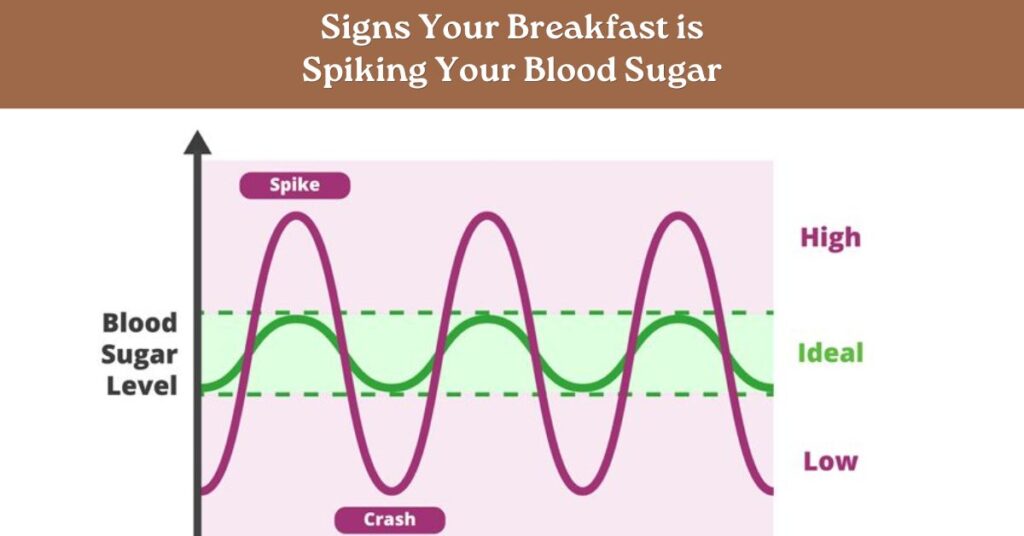
If you consistently experience any of these symptoms between 9 AM and noon, your breakfast is likely the cause:
- Sudden fatigue or drowsiness 60–90 minutes after eating — often linked to an afternoon energy crash.
- Brain fog or difficulty concentrating before lunch — a common symptom explained in detail here: Brain fog after eating.
- Strong sugar or carbohydrate cravings in the mid-morning.
- Shakiness, irritability, or anxiousness between meals.
- Hunger returning unusually fast (within 1–2 hours of breakfast).
- Headaches that start mid-morning and fade after eating.
These are your body’s warning signals — and also early indicators of developing insulin resistance — including subtle warning signs covered here: early signs of high blood sugar, a condition the CDC reports now affects tens of millions of American adults, most of whom are unaware.
The Hidden Reality of American Breakfast Culture
Most people don’t realize how bad the situation actually is. Nutrition surveys show that nearly 2 out of 3 American adults begin their day with refined carbohydrates — cereal, toast, pastries, sweetened coffee drinks, or fast food. These aren’t fringe choices. They’re the standard American breakfast.
According to the Centers for Disease Control and Prevention (CDC), over 96 million American adults are currently living with prediabetes — and the vast majority don’t know it. What they eat for breakfast every morning is either quietly worsening that condition or helping to reverse it.
The food industry has mastered the art of disguising sugar as nutrition. Walk down the cereal aisle at any grocery store and you’ll see boxes covered in claims like “heart healthy,” “whole grain,” and “good source of fiber.” But behind that marketing language is a product that behaves like dessert in your bloodstream.
Manufacturers also use dozens of different names for sugar on ingredient labels — dextrose, maltodextrin, organic cane juice, evaporated cane syrup, barley malt, brown rice syrup — specifically to prevent you from recognizing how much sugar is actually in the product.
The problem isn’t that Americans are making bad choices on purpose. The problem is that the breakfast market is engineered to keep you coming back for more — and refined carbohydrates are the most effective tool for doing exactly that.
12 Worst Breakfast Foods That Spike Blood Sugar Fast
Let’s break down the foods that are doing the most damage to your morning glucose levels. If any of these are part of your daily routine, you now have the information you need to make a better choice.
Quick Swap Reference
| Avoid This | Choose This Instead |
| Sugary cereal | Greek yogurt + walnuts |
| Fruit juice | Whole berries |
| White toast + jam | Eggs + avocado |
| Instant oatmeal packets | Steel-cut oats + chia seeds |
| Flavored coffee drinks | Black coffee or cold brew |
| Granola bars | Hard-boiled eggs + almonds |
1. Sugary Breakfast Cereals
This is the biggest offender in the American pantry, and it’s been hiding in plain sight for decades.
Most boxed cereals — even those labeled “whole grain,” “multigrain,” or “heart-healthy” — are made from grains that have been ground into ultra-fine flour and puffed, extruded, or flaked under intense industrial heat and pressure. By the time a grain becomes a cereal flake, its natural structure is almost completely destroyed. Your digestive system barely has to do any work to break it down. The carbohydrates flood your bloodstream within minutes of eating.
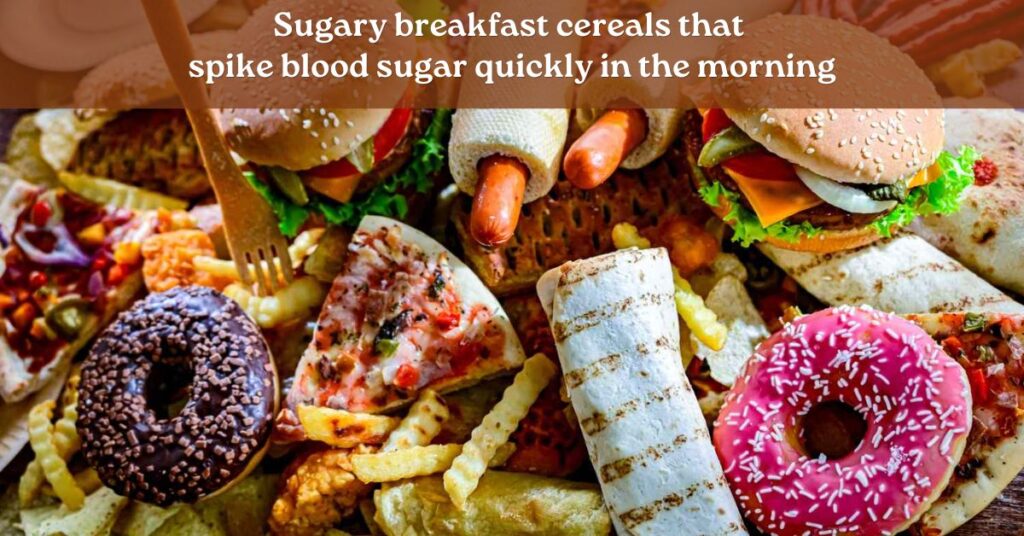
Layer on top of that the added sugars listed under a dozen different names on the ingredient label, and you have a product that mimics candy in your bloodstream — regardless of what the box says.
Glycemic Impact Comparison: Common Breakfast Foods
| Breakfast Food | Average Glycemic Impact | Blood Sugar Risk |
| Sugary cereal | Very High | Severe spike |
| White toast | Very High | Rapid spike |
| Instant oatmeal (flavored) | High | Moderate-fast spike |
| Bagel | High | Sustained spike |
| Plain Greek yogurt | Low | Minimal response |
| Eggs | Minimal | Nearly flat |
| Avocado | Minimal | Nearly flat |
| Chia seeds | Minimal | Nearly flat |
The fix: Plain Greek yogurt topped with a small handful of raw walnuts and a sprinkle of cinnamon. It takes two minutes, provides lasting protein, and creates a completely flat glucose response.
2. White Toast with Jam
Two slices of white bread can raise blood sugar nearly as quickly as straight sugar. That’s not an exaggeration — white bread has a glycemic index that rivals pure glucose because the milling process strips out every component that would normally slow down digestion: the bran, the germ, and the fiber.

Spreading sweetened jam on top makes things significantly worse. Commercial jams are typically made from concentrated fruit syrup and added sugar, not actual fruit. You’re effectively eating two layers of fast-acting carbohydrates on an already insulin-resistant stomach.
The fix: One slice of sprouted whole-grain bread (such as Ezekiel bread) topped with a generous layer of natural, no-sugar-added almond butter and two poached eggs alongside.
3. Pancakes and Packaged Waffles
The Saturday morning pancake stack is a beloved American tradition — and one of the most metabolically destructive breakfast choices you can make.
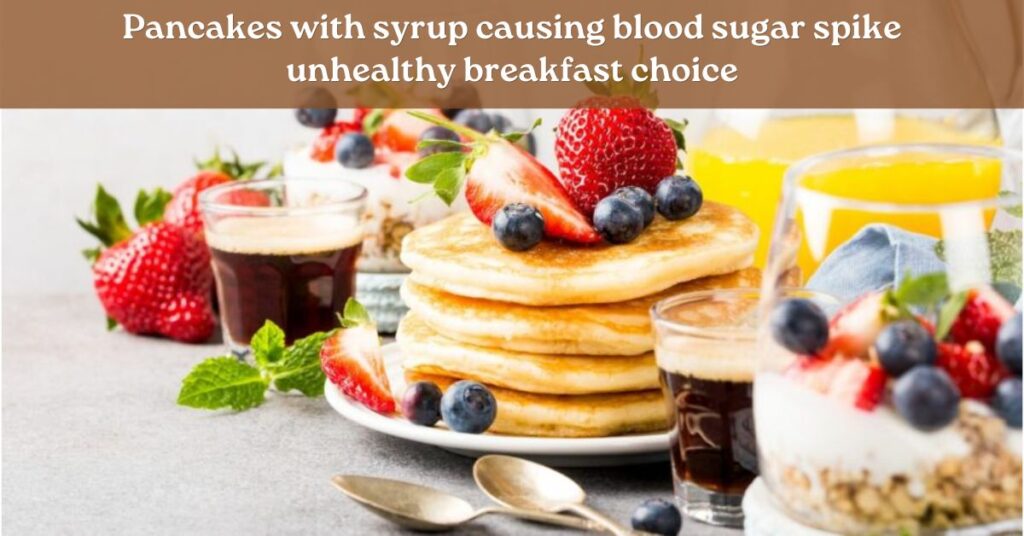
Standard pancake batter is made from refined white flour, white sugar, and vegetable oil. Frozen waffles are nearly identical. Neither contains meaningful protein or fiber. When you pour commercial “maple syrup” over them — which is almost always high-fructose corn syrup with brown food coloring — you’re delivering a dense hit of fast-acting carbohydrates that triggers a massive insulin surge, followed by an almost guaranteed mid-morning energy crash.
The fix: Almond flour pancakes made with eggs provide a similar texture and experience with dramatically less glucose impact. Top with fresh berries instead of syrup.
4. Flavored Yogurt
Yogurt has one of the strongest “health halos” in the grocery store, and it has misled a generation of well-intentioned eaters.
Plain, full-fat Greek yogurt is genuinely excellent for blood sugar — high in protein, probiotics, and healthy fat. But the flavored, fruit-on-the-bottom varieties sold in most US supermarkets are a completely different product. A single small cup of strawberry or vanilla yogurt can contain 20 to 25 grams of added sugar — the equivalent of eating ice cream for breakfast.

The fix: Buy plain, unsweetened, full-fat Greek yogurt and add your own fresh berries and a drizzle of raw honey if needed. You control the sugar — and you’ll use far less than the manufacturer would.
5. Store-Bought Smoothies and Juice Bar Drinks
Smoothies carry an almost unshakeable reputation as a health food — but the smoothies sold at popular US chains are a very different product from what you’d make at home.
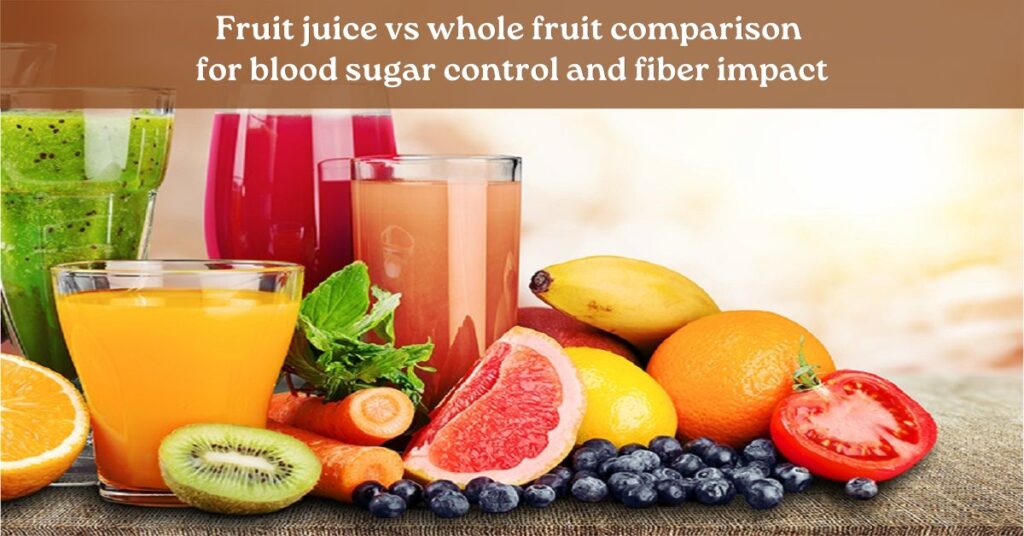
Commercial smoothies frequently contain sweetened fruit juice as a base, sherbet, frozen yogurt, and flavored syrups that pack 60 to 80 grams of sugar into a single drink. Because the ingredients are liquefied, there is no fiber structure left to slow down absorption. The sugar hits your bloodstream almost immediately — faster than if you had eaten the fruit whole.
The fix: Make your own at home. Blend unsweetened almond milk, one scoop of low-sugar protein powder, a large handful of spinach, half an avocado, and a tablespoon of chia seeds. Ready in two minutes with a completely different glucose response.
6. Pastries, Donuts, and Muffins
Walk into any American office, hospital, or school in the morning and you’re likely to find donuts, muffins, or croissants on the breakroom table. These are among the worst breakfast foods for diabetics and anyone managing their metabolic health.
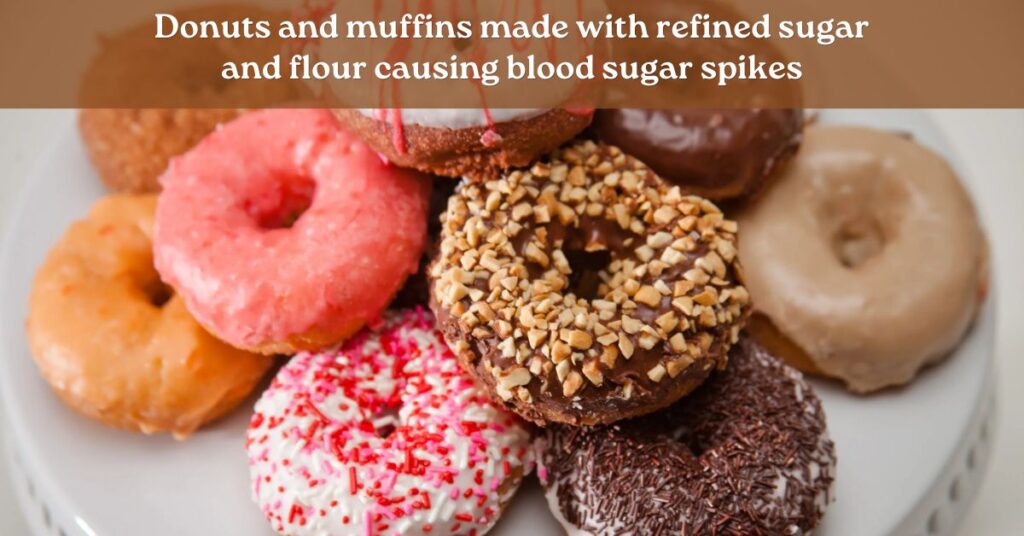
Pastries are an engineered combination of refined white flour, concentrated sugar, and highly processed industrial seed oils. This combination doesn’t just spike blood sugar — it drives cellular inflammation that worsens insulin resistance over time. The “health” muffin at the coffee shop is often just as bad; a large bran muffin can contain more sugar than two candy bars.
The fix: Save pastries for rare occasions and replace the daily habit with a boiled egg and a handful of almonds — genuinely portable and takes seconds.
7. Fruit Juice
Orange juice at breakfast is one of the most deeply ingrained habits in American food culture — and one of the most damaging to morning blood sugar.
When a fruit is juiced, 100% of its fiber is removed. Fiber is the biological mechanism that slows sugar absorption. An 8-ounce glass of orange juice contains the natural sugars of three to four whole oranges, but none of the fiber. For your liver and bloodstream, it behaves nearly identically to soda.
This applies to every fruit juice: apple, cranberry, grape, pomegranate, and even cold-pressed “green” juices that are predominantly fruit.
The fix: Eat one whole piece of fruit alongside your breakfast rather than drinking juice. Or skip fruit entirely at breakfast and opt for non-starchy vegetables like spinach or peppers, which have almost no glucose impact.
8. Bagels
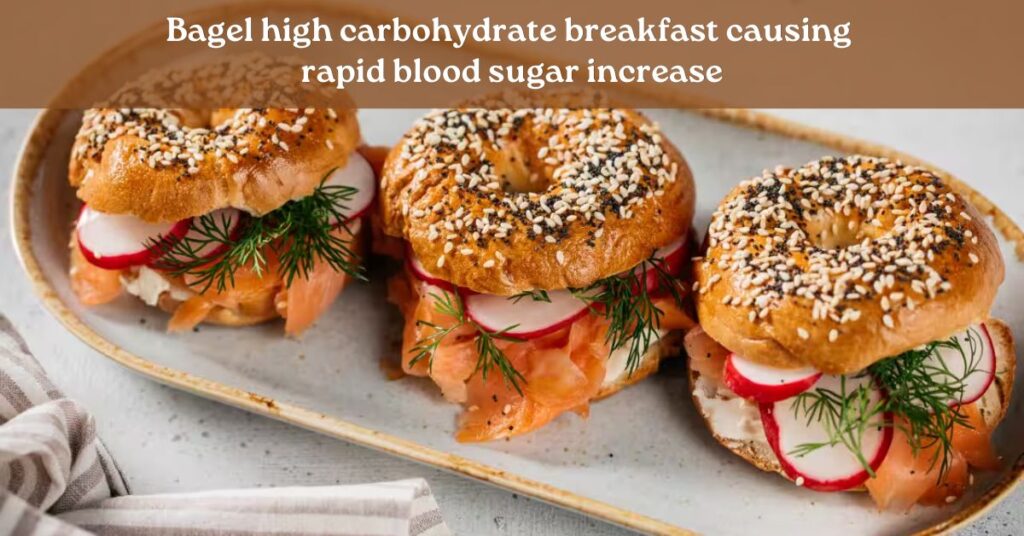
A standard American deli bagel contains the carbohydrate equivalent of four to five slices of white bread — almost entirely from high-glycemic white flour. Even a “small” bagel clocks in at 50 to 60 grams of refined carbohydrates. Add a smear of sweetened cream cheese and you’ve compounded the problem significantly.
The fix: If you love bread-based breakfasts, choose one slice of dense, seeded whole-grain bread. The fiber content slows absorption significantly compared to a bagel.
9. Granola Bars
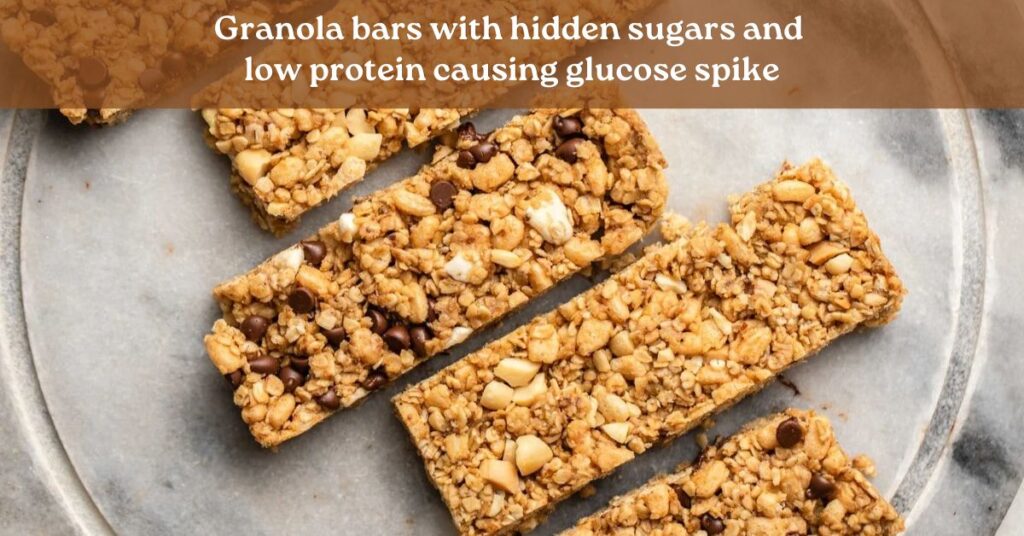
Most granola bars sold in US supermarkets are bound together with high-fructose corn syrup or honey and contain almost no protein — the macronutrient most responsible for blunting blood sugar response. The result is a rapid glucose spike that leaves you hungry again well before lunch.
The fix: Keep individually portioned bags of raw almonds or walnuts in your bag or car for truly busy mornings. A small handful provides more metabolic staying power than any granola bar on the market.
10. Flavored Coffee Drinks and Sweetened Creamers
Flavored lattes, frappuccinos, and iced mochas from major US coffee chains can deliver 50 to 60 grams of sugar — more than a can of soda — before you’ve eaten a single bite of food. Even home coffee drinkers who use popular liquid creamers may be consuming 10 to 15 grams of corn syrup with every morning cup.
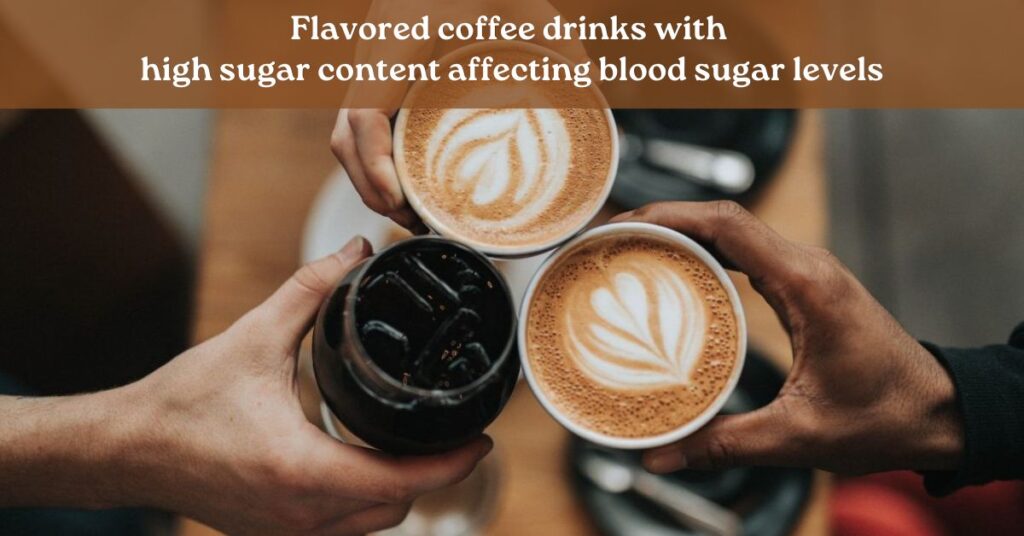
The fix: Black coffee, cold brew, or espresso with unsweetened almond milk. If you need sweetness, add a pinch of cinnamon — it naturally supports insulin sensitivity rather than working against it.
11. Instant Oatmeal Packets
Flavored instant oats have been pre-cooked, dehydrated, and pulverized to cook in under a minute. That processing dramatically raises the glycemic index compared to whole oats. A single packet can contain 12 to 15 grams of added sugar on top of fast-digesting starch.
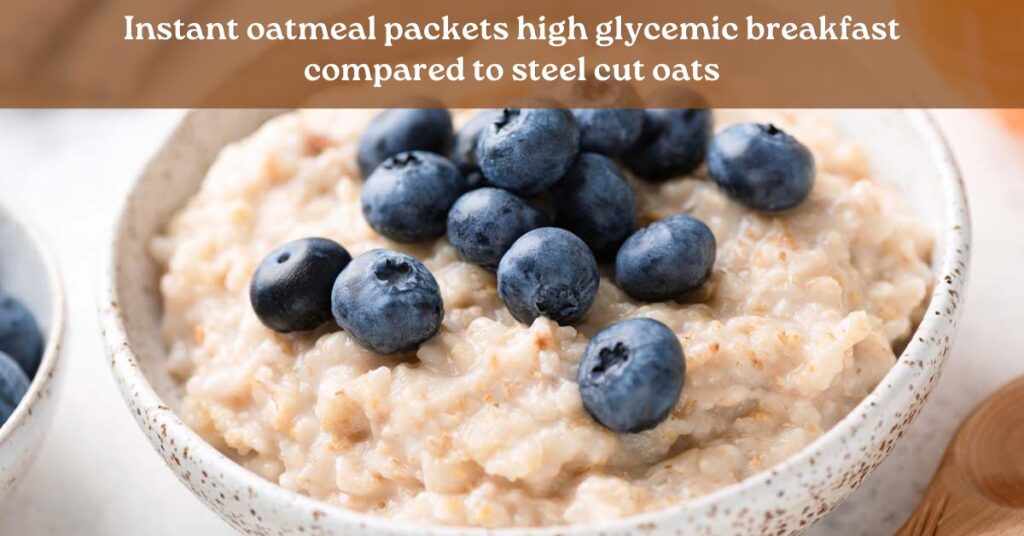
The fix: Steel-cut or whole rolled oats, cooked from scratch and topped with chia seeds, natural almond butter, and cinnamon. Or prepare overnight oats the night before for an equally fast morning option with dramatically better glucose impact.
12. Fast-Food Breakfast Combos
A standard fast-food breakfast combo — a biscuit or croissant sandwich, a hash brown, and a large sweetened coffee — delivers a devastating triple threat: refined starch, inflammatory fried oil, and liquid sugar. This combination can keep insulin elevated for hours, promote fat storage, and leave you significantly more tired by mid-morning than if you hadn’t eaten at all.
The fix: If the drive-thru is unavoidable, order a plain egg patty or grilled protein item and skip the biscuit, hash brown, and flavored drink entirely.
The Real Problem: Why These Foods Are So Hard to Avoid
Refined carbohydrates trigger a dopamine response in the brain — the same reward circuit activated by other pleasurable stimuli. When you eat sugar and refined starch, your brain briefly feels good. That’s not a character flaw. That’s neuroscience. The food industry has spent billions of dollars engineering products specifically to exploit that response.
Additionally, the blood sugar crash that follows a high-carb breakfast triggers real, physical cravings for more sugar. Your brain interprets low blood sugar as an emergency and demands fast fuel — which is why many people struggle with constant sugar cravings. This is the cycle that keeps millions of Americans reaching for a second coffee, a mid-morning snack, or a large sugary lunch that starts the whole roller coaster over again.
Breaking the cycle starts at breakfast. When your morning meal keeps blood sugar stable, your entire day shifts — cravings decrease, energy becomes more consistent, and food decisions throughout the afternoon become dramatically easier to manage.
The Best Breakfast Foods for Blood Sugar Control
The best breakfast for blood sugar control follows one simple principle — choosing foods that stabilize blood sugar consistently: build every meal around the Satiety Trio — protein, fiber, and healthy fat. These three components work together to slow digestion, prevent glucose spikes, and keep you feeling full and focused for hours.
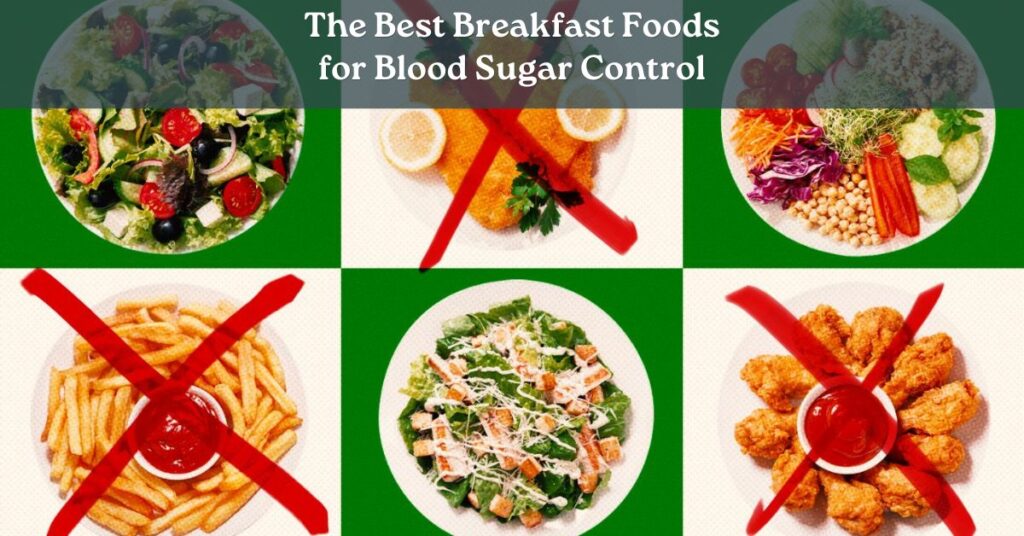
Eggs + Avocado — The gold standard. Eggs deliver complete protein with no carbohydrates. Avocado provides monounsaturated fat and dense fiber. This combination produces one of the flattest glucose responses of any breakfast food.
Plain Greek Yogurt + Nuts + Cinnamon — Full-fat, unsweetened Greek yogurt is packed with casein protein, which digests slowly. Raw walnuts or almonds add healthy fat. Cinnamon research suggests a natural role in supporting insulin sensitivity.
Chia Pudding — Prepare overnight by soaking chia seeds in unsweetened almond milk. Chia seeds form a gel in your stomach that physically slows digestion and prevents rapid glucose absorption.
Vegetable Omelet — Three eggs cooked in real butter or olive oil with spinach, bell peppers, and onions: protein-rich, fiber-rich, and near-zero glucose impact.
Sprouted Whole-Grain Toast + Nut Butter + Eggs — If you need bread, one slice of dense sprouted bread, heavily spread with natural nut butter, served alongside two eggs. The fat and protein act as a speed bump, slowing carbohydrate absorption.
Cottage Cheese Bowl — High in slow-digesting casein protein. Top with pumpkin seeds and cinnamon for a fast, savory, blood-sugar-friendly breakfast that requires zero cooking.
How to Prevent Blood Sugar Spikes After Breakfast Naturally
Eat protein first. If your plate has eggs, avocado, and berries — eat the eggs and avocado first. Coating your stomach with protein and fat slows gastric emptying and softens the glucose impact of any carbohydrates eaten afterward.
Walk for 10 minutes after eating. When you move your muscles after a meal, they absorb glucose directly from your bloodstream without requiring insulin — naturally flattening the post-meal spike.
Drink water, not liquid calories. Avoid fruit juice, sweetened coffee drinks, and flavored teas in the morning. Stick to water, black coffee, or unsweetened herbal tea.
Add cinnamon or apple cider vinegar. Both have research supporting their role in improving insulin sensitivity. A pinch of Ceylon cinnamon in your coffee or a tablespoon of apple cider vinegar diluted in water before eating can measurably reduce post-meal glucose response.
Prioritize sleep. Poor sleep directly impairs insulin sensitivity the following morning. Even one night of inadequate sleep can significantly worsen your body’s glucose response to the same breakfast you eat every day.

A Simple Weekly Breakfast Plan for Blood Sugar Stability
Monday through Friday (Speed and Consistency):
- Option A: Two hard-boiled eggs + half an avocado + a handful of blueberries
- Option B: Plain Greek yogurt + walnuts + chia seeds + cinnamon
- Option C: Low-sugar protein shake + unsweetened almond milk + tablespoon of chia seeds — blended in under 2 minutes
Saturday and Sunday (More Time, More Satisfaction):
- Three-egg vegetable omelet cooked in butter with spinach, peppers, onions, and mushrooms — served with turkey sausage (no added sugar)
- Almond flour pancakes with fresh berries and a side of scrambled eggs
Emergency Backup (No Time / Oversleeping):
Keep a bag of raw almonds in your car and a container of protein powder on your counter. Shaking protein powder into water takes 30 seconds and is infinitely better than a drive-thru stop.
Still experiencing energy crashes after cleaning up your breakfast? If you’ve already swapped out the high-sugar foods and you’re still feeling fatigued, sluggish, or hungry by mid-morning — it may be a sign your body needs more than dietary changes alone. Read our full review of GlucoBerry → to understand how targeted nutritional support can work alongside a low-glycemic diet for more complete glucose control.
When Diet Alone Isn’t Enough
For many people, switching to a low-glycemic breakfast produces noticeable energy improvements within days. Morning crashes disappear, cravings quiet down, and focus sharpens.
Even when breakfast habits improve significantly, some people still struggle with glucose control due to deeper metabolic factors like insulin resistance at the cellular level. Years of high-carb eating can alter how efficiently cells respond to insulin — a process that dietary changes alone may not fully correct.
In these cases, certain evidence-backed nutritional ingredients have been shown to support insulin sensitivity, improve glucose uptake, and reduce post-meal blood sugar spikes. Ingredients like berberine, chromium, cinnamon extract, and alpha-lipoic acid have all been studied for their role in glucose metabolism.
If you’ve already cleaned up your breakfast but still deal with energy crashes, cravings, or stubborn blood sugar swings, it may go deeper than diet alone.
In that case, some people explore targeted nutritional support designed to work alongside a low-glycemic lifestyle.
👉 Read our full GlucoBerry review to see how it supports healthy glucose metabolism and energy levels →
Important: Always consult with your doctor or a registered dietitian before making significant changes to your diet or adding any supplements, especially if you are currently managing diabetes or taking medication for blood sugar control.
Frequently Asked Questions About Breakfast and Blood Sugar
What breakfast foods spike blood sugar the most? The worst offenders are sugary cereals, white bread toast with jam, pancakes with syrup, fruit juice, flavored yogurt, pastries, and fast-food breakfast combos. These are all high in refined carbohydrates and added sugars that cause rapid glucose increases — especially dangerous in the morning when insulin sensitivity is naturally lower.
What is the best breakfast for diabetics to keep blood sugar stable? The best breakfast for blood sugar control is built around protein, healthy fat, and fiber. Eggs with avocado, plain Greek yogurt with nuts, chia pudding, or a vegetable omelet are all excellent options that maintain steady glucose levels for hours.
Are eggs a good breakfast for blood sugar control? Yes — eggs are one of the best breakfast foods for blood sugar management. They contain complete protein and zero added sugar, slow gastric emptying, and reduce the glucose impact of other foods eaten in the same meal.
Is oatmeal good or bad for blood sugar? It depends entirely on the type. Plain steel-cut or whole rolled oats, when combined with protein and healthy fat, are a reasonable choice. Flavored instant oatmeal packets contain added sugars and fast-digesting refined starch that behave more like candy than health food.
What unhealthy breakfast foods should people with diabetes avoid? Sugary cereals, pastries, fruit juice, white bread, bagels, pancakes with syrup, flavored coffee drinks, granola bars, and fast-food breakfast combos should all be avoided or dramatically reduced.
What is a fast, simple breakfast for people managing blood sugar on busy mornings? Hard-boiled eggs with berries, Greek yogurt with almonds, peanut butter on sprouted whole-grain bread, or a low-sugar protein shake with chia seeds are all fast, practical options that protect glucose stability.
How can I prevent blood sugar spikes after breakfast? Choose high-protein, high-fiber meals; avoid sweetened drinks; eat protein and fat before carbohydrates; take a 10-minute walk after eating; and get adequate sleep the night before.
Does skipping breakfast help with blood sugar? For some people, intermittent fasting or skipping breakfast can reduce glucose exposure overall. But for many Americans, skipping breakfast leads to overeating at lunch and throughout the afternoon, which can destabilize blood sugar for the rest of the day. A properly constructed, low-glycemic breakfast is generally the better long-term strategy.
Final Takeaway
Your breakfast sets the tone for your entire day.
Choose the wrong foods → spikes, crashes, cravings
Choose the right foods → stable energy, focus, and control
Start simple:
- Add protein
- Reduce sugar
- Keep it consistent
That alone can transform how you feel before noon.
If you want a complete step-by-step system, here’s a deeper guide on how to stabilize blood sugar naturally.