

Brain Fog After Eating? The Blood Sugar Connection Explained
Experiencing brain fog after eating is a silent sign your blood sugar needs attention. You are sitting at your desk, staring at your computer screen. You have just returned from your lunch break, and you have an important project to finish. But as you look at the spreadsheet or email in front of you, the words seem to blur together. You read the same sentence three times, but the meaning just will not register in your mind. Your head feels heavy, your thoughts are moving through thick molasses, and it takes massive effort just to string a coherent sentence together.
For millions of Americans working demanding jobs, the post-lunch afternoon hours are a daily battle for focus. Many assume this mental decline is just a normal part of working long hours, staring at screens, or getting older. But in reality, your metabolism may be sending an early warning signal.
If you frequently experience this mental cloud and catch yourself wondering why you can’t think clearly after meals, your body may be responding to a hidden blood sugar imbalance. That thick, heavy mental block is not a personal failure; it is a powerful biological reaction and one of the most accurate warning signs that your metabolism needs support.
Here is the deep, fascinating science behind the glucose brain fog connection, and exactly how you can protect your focus to stay sharp all day long.
Table of Contents
Why Do I Get Brain Fog Around 3PM Every Day?
Many people notice their focus drops sharply between 2 PM and 4 PM. This window often matches the timing of post-meal blood sugar fluctuations, especially after carbohydrate-heavy lunches. When glucose rises quickly and then falls just as fast, the brain temporarily loses access to stable fuel, which can feel like mental shutdown.

Why Can’t I Think Clearly After Eating?
In the medical and wellness community, the phrase “brain fog” is used to describe a collection of cognitive symptoms. It is not a medical diagnosis on its own, but rather a severe symptom of an underlying issue. Brain fog includes poor memory, difficulty concentrating, an inability to process new information, and a general feeling of mental detachment.
When this happens specifically after you consume food, it is called mental fatigue after meals. To understand why your lunch is stealing your focus, you have to understand how your brain consumes fuel.
Your brain is the most metabolically demanding organ in your entire body. Even though it only accounts for about 2% of your total body weight, it consumes a massive 20% of your daily energy. Researchers from institutions including Harvard Health Publishing have long emphasized that the brain depends heavily on stable glucose delivery to maintain attention, memory, and decision-making performance throughout the day. Unlike your muscles or your liver, your brain cannot store its own energy for later use. It relies completely on a steady, second-by-second delivery of glucose (sugar) directly from your bloodstream.

When that delivery is smooth and steady, you feel sharp, witty, and productive. But when that delivery is chaotic, your cognitive function falls apart.
The Neuroscience of Digestion: The Glucose Brain Fog Connection
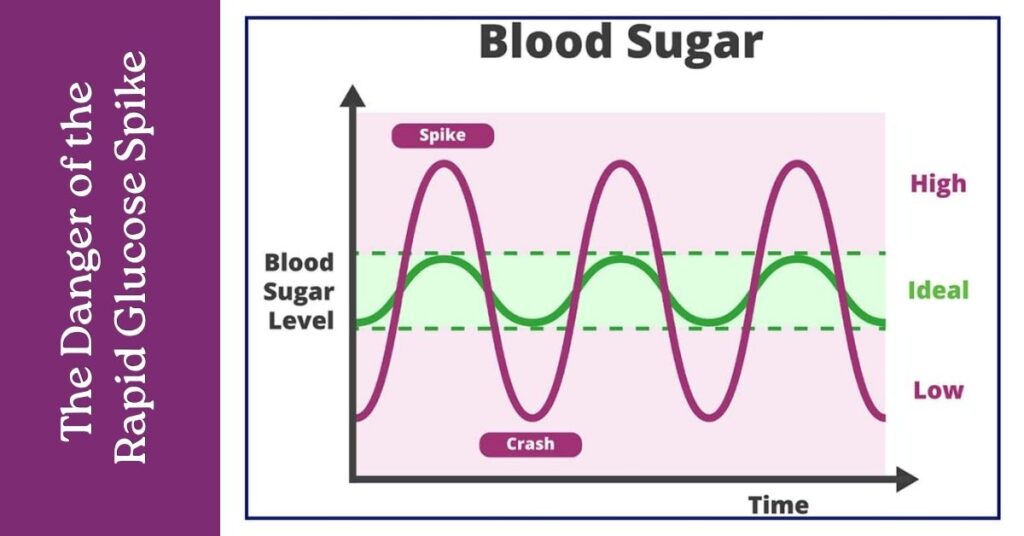
To fix the problem, we must look at the invisible chemical reactions happening inside your body the moment you swallow your food. The glucose brain fog connection usually comes down to a chaotic roller coaster of spikes and crashes.
The Danger of the Rapid Glucose Spike
The standard American diet is built around fast-digesting, refined carbohydrates. A typical lunch might be a large submarine sandwich on a thick roll, a bowl of white pasta, or a wrap with a side of chips.
When you eat these heavy, “naked” carbohydrates, your digestive system breaks them down into glucose incredibly fast. This creates a massive tidal wave of sugar that floods into your bloodstream. You might think that more sugar equals more brain power, but the opposite is true.
The brain does not respond well to sudden large swings in glucose availability, which leads to immediate oxidative stress and mental slowing.
The Massive Insulin Surge
Your body knows that high blood sugar is physically dangerous. To protect your vital organs, your pancreas hits the emergency alarm and pumps out a massive wave of a hormone called insulin. Insulin’s job is to clear the toxic levels of sugar out of your blood and push it into your cells.
According to metabolic research published by organizations like the American Diabetes Association, large swings in blood sugar can directly affect energy stability throughout the day. Because the sugar spike from your meal was so huge, your pancreas overreacts. It sends out way too much insulin, which clears the sugar out of your blood far too quickly.
The Crash: Reactive Hypoglycemia in the Brain
This aggressive clearing of sugar creates a sudden, steep drop in your blood glucose levels. Suddenly, the steady stream of fuel your brain relies on dries up.
Your brain senses this sudden fuel shortage and goes into a mild state of panic. To conserve energy and keep you alive, it dials down its “non-essential” functions. It slows down your cognitive processing speed, dims your working memory, and reduces your ability to focus. This sudden, severe fuel shortage—sometimes referred to as reactive hypoglycemia—is the exact moment the heavy brain fog after eating drops over your mind.
The Hidden Biology: Inflammation and the Blood-Brain Barrier
The roller coaster of spikes and crashes is the primary cause of mental fatigue after meals, but there is a deeper layer to this neuroscience that is incredibly important to understand.
Systemic Inflammation from Diet
When you constantly flood your system with heavily processed foods and massive amounts of sugar, it triggers a low-grade inflammatory response throughout your entire body. Your immune system sees the rapid influx of poor-quality food as a stressor, and it releases inflammatory chemicals called cytokines.
Crossing the Blood-Brain Barrier
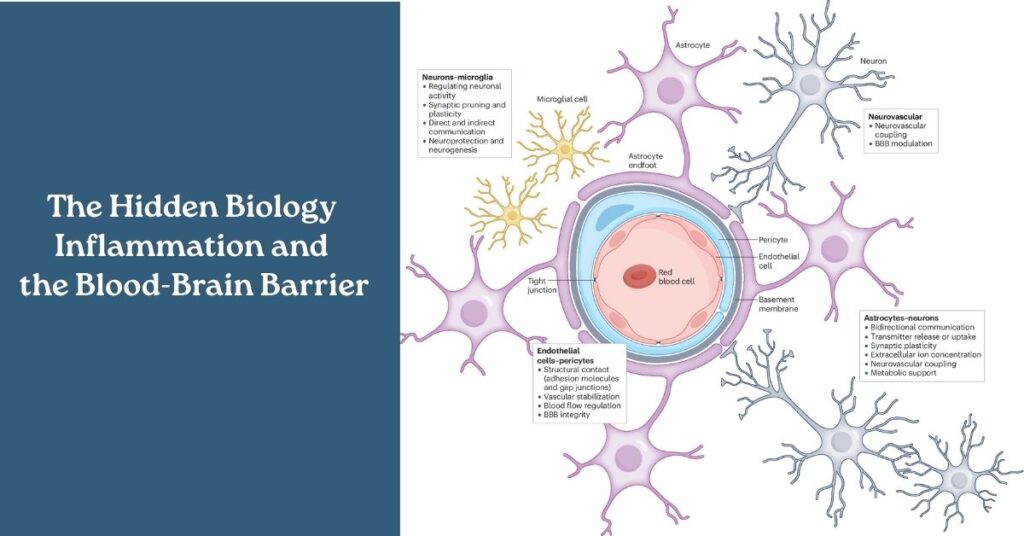
Your brain has a protective shield called the blood-brain barrier, which is designed to keep toxins and inflammation out of your delicate neural tissues. However, chronic blood sugar spikes and systemic inflammation can actually weaken this barrier over time.
When those inflammatory cytokines cross into the brain, they physically slow down the communication between your neurons (brain cells). Imagine trying to drive down a highway covered in thick mud; that is what inflammation does to your thoughts. This neuroinflammation is a massive contributor to the feeling that you just cannot think clearly after eating a heavy meal.
Signs Your Brain Fog Is Tied to Blood Sugar
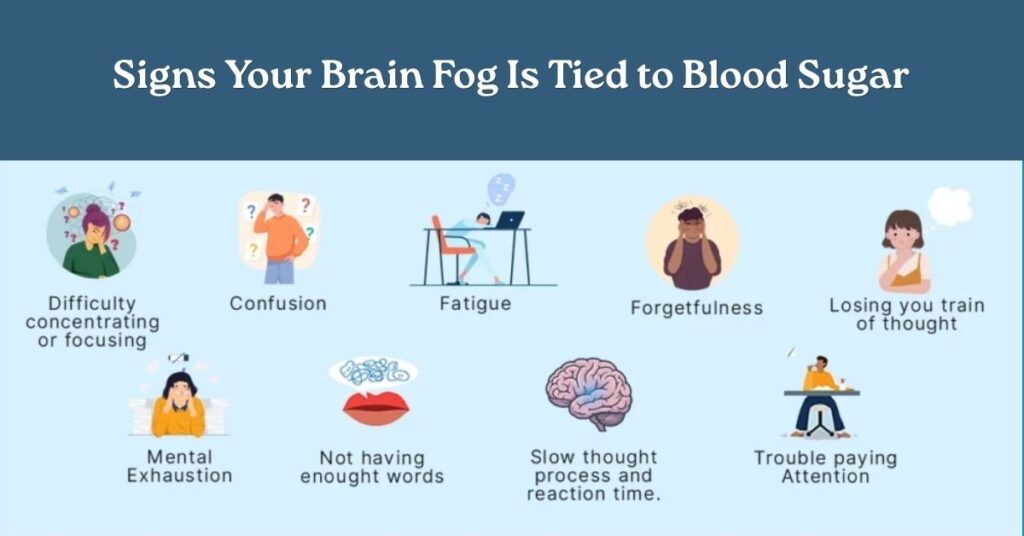
How do you know if your afternoon cognitive decline is just from a boring meeting or if it is a true metabolic warning sign? Check to see if you experience these common, verified indicators:
- The 45-Minute Delay: Your mind does not go blank the second you finish your meal. The fog rolls in predictably about 30 to 45 minutes after eating, right as your insulin levels peak and your blood sugar drops.
- The Sweet Tooth Rescue: Even though your stomach is full, you feel a desperate urge to eat a piece of chocolate, grab a donut, or drink a sweetened soda to “wake your brain up.”
- Physical Heaviness: The mental fog is accompanied by physical symptoms. Your eyelids feel heavy, you feel slightly cold, or your limbs feel lethargic.
- Mood Swings: As the fog rolls in, your patience disappears. You feel suddenly irritable, anxious, or easily frustrated by simple tasks.
- The “Second Wind” Later On: You feel terrible at 2:30 PM, but by 5:00 PM, your brain miraculously clears up. This happens because your liver eventually releases stored emergency sugar to fix the crash.
If you checked several of these boxes, your mental fatigue is deeply tied to how your body handles glucose.
The Worst Lunch Time Offenders for Mental Fatigue After Meals
If you want to protect your focus, you have to know which foods cause the most chaotic chemical reactions. Some foods are guaranteed to trigger the glucose brain fog connection.
Liquid Carbohydrates
Sodas, sweetened iced teas, fruit juices, and blended coffee shop drinks are the worst offenders. Because they contain no fiber to slow them down, liquid sugars hit your bloodstream almost instantly. They cause the steepest, most violent spikes and crashes possible, leading to severe afternoon brain fog.
Heavy Starches Without Fiber
A massive bowl of white pasta, a large bagel, or a thick crust pizza might taste comforting, but they are pure starch. In your digestive tract, starch is quickly converted directly into glucose. Without fiber to act as a speed bump, these meals overwhelm your system.
Hidden Sugars in “Healthy” Foods
Many Americans try to eat healthy lunches but still experience brain fog. This is because hidden sugars are everywhere. A store-bought salad dressed in sweet raspberry vinaigrette and topped with dried cranberries can contain just as much sugar as a candy bar. Flavored yogurts, instant oatmeals, and “healthy” granola bars are notorious for causing sneaky blood sugar spikes that ruin your concentration.

How to Protect Your Focus and Eliminate Brain Fog After Eating
You do not have to accept afternoon brain fog as a normal part of your life. You can completely prevent the post-meal crash by changing how your body processes your food using strategies similar to those explained in our guide on how to stabilize blood sugar naturally without strict dieting.
By making a few authoritative, science-backed changes to your routine, you can keep your brain perfectly fueled.
Master the “Satiety Trio” for Cognitive Stamina
The golden rule of stable mental energy is to never eat carbohydrates alone. You must pair your carbs with the “Satiety Trio”: high-quality protein, healthy fats, and fiber.
Protein (chicken, fish, tofu) and fat (avocado, olive oil, nuts) take a very long time to digest. When you eat them alongside your carbohydrates, they act like a heavy dam in your digestive tract. They force the sugar from your food to enter your bloodstream in a slow, steady, continuous trickle. This completely prevents the massive glucose spike and ensures your brain gets a reliable stream of fuel for hours.
The Power of Food Sequencing for Brain Health
The order in which you eat the food on your plate can change how your brain feels. Always eat your high-fiber vegetables first. This coats your stomach with a physical mesh. Eat your proteins and fats second. Save your starches or sugars for last. By the time the carbohydrates hit your stomach, they are trapped behind the fiber and protein, forcing them to digest slowly and keeping your mental energy perfectly stable.
The 10-Minute Post-Meal Cognitive Walk
Sitting perfectly still at your desk after a meal allows sugar to pool in your blood, triggering the massive insulin release that causes brain fog.
Instead, make it a non-negotiable habit to walk for just 10 minutes right after you finish your lunch. Your muscles can absorb excess sugar directly from your bloodstream without needing any insulin. This gentle movement acts like a biological sponge, soaking up the excess glucose before it can cause a spike. This is one of the most powerful ways to guarantee a clear, focused afternoon.

The Kidneys’ Role in Clearing the Mental Fog
When discussing blood sugar and brain health, we often ignore one of the most important metabolic organs in the body: the kidneys.
Your kidneys act as your body’s ultimate filtration system. When your blood sugar spikes too high, your kidneys act as an emergency release valve. Instead of letting excessively elevated levels of circulating sugar inflame your brain, healthy kidneys stop reabsorbing the excess sugar and naturally drain it away through your urine.
Supporting your body’s natural “blood sugar drainage” system is crucial. If your kidneys are functioning optimally and draining excess sugar efficiently, you avoid the massive peaks. No massive peak means no massive crash, which means your brain stays clear and focused. Staying highly hydrated with pure water throughout the day is essential to keep this filtration system running smoothly.
Daily Support for Healthy Blood Sugar and Clear Thinking
Consistently choosing perfectly balanced lunches and taking a 10-minute walk after every meal is the ultimate goal. But real life is messy. We have stressful deadlines, working lunches, and days where we just cannot eat perfectly.
This is why many high-performing, health-conscious Americans are incorporating targeted nutritional support into their daily morning routines. The goal is to provide your body with natural, science-backed ingredients that reinforce your internal metabolic systems.
Even with balanced meals, modern eating patterns and daily stress can still make blood sugar harder to regulate consistently. Natural supplements like GlucoBerry are specifically formulated to support your body in this exact way. Instead of relying on temporary fixes like caffeine to push through the fog, GlucoBerry is designed to support the kidneys’ natural role in maintaining healthy blood sugar balance as part of the body’s metabolic drainage system.
Ready to support your body the right way? Check the latest GlucoBerry reviews and explore the official website for ingredients, benefits, and pricing.
It offers an extra layer of defense against those massive, energy-draining post-meal spikes. When your internal environment is calmly balanced and your body’s natural drainage system is fully supported, avoiding the heavy, cognitive cloud of brain fog becomes significantly easier.
If afternoon crashes and mental fog are happening daily, it may be worth exploring gentle metabolic support options that help your body maintain steady blood sugar throughout the day.
Frequently Asked Questions About Brain Fog and Diet
To help you fully understand the connection between your meals and your mind, here are answers to the most common questions regarding mental fatigue after meals.
Is it normal to feel out of it after eating a big meal?
While feeling slightly relaxed after a heavy Thanksgiving-style meal is normal due to blood flow shifting to your stomach, feeling severely confused, unable to focus, or “out of it” on a daily basis is not normal. It is a clear sign of a reactive blood sugar crash caused by eating too many fast-digesting carbohydrates.
Can food allergies or sensitivities cause brain fog?
Yes. Undiagnosed food intolerances (like a sensitivity to gluten or dairy) can cause massive systemic inflammation in the gut. This inflammation can cross the blood-brain barrier and cause severe brain fog. However, if your brain fog happens after almost any high-carbohydrate meal, blood sugar is the most likely culprit.
How long does brain fog after eating usually last?
A reactive blood sugar crash usually causes brain fog that lasts anywhere from 45 minutes to 2 hours. The fog lifts when your liver finally steps in to release stored emergency glycogen to bring your blood sugar levels back up to a safe, functional baseline.
Will drinking coffee fix my brain fog?
Coffee is a temporary band-aid, not a cure. Caffeine works by blocking the sleep receptors in your brain, but it does not fix the underlying fuel shortage. In fact, drinking highly sweetened coffee will just cause another blood sugar spike, leading to an even worse mental crash later in the afternoon.
Can high blood sugar cause brain fog after meals?
Yes. Rapid rises and falls in blood sugar can temporarily affect how efficiently the brain receives energy. When glucose delivery becomes unstable, concentration, memory recall, and processing speed can all feel noticeably slower until levels stabilize again.
Final Thoughts: Reclaim Your Mental Clarity
Your brain is a high-performance machine, and it requires high-quality, stable fuel to run effectively. If you are constantly battling severe mental fatigue after your meals, it is time to stop blaming yourself for a lack of focus and start listening to your metabolism.
By understanding the true biology of the glucose brain fog connection, you can take your power back. You can make smarter, empowering choices every time you sit down to eat. Start balancing your plates with protein and fiber, practice smart food sequencing, take a short walk after lunch, and consider exploring natural metabolic support to keep your internal systems running smoothly.
By successfully flattening your blood sugar curve, you can completely eliminate the heavy cognitive cloud. You can step off the roller coaster and finally enjoy sharp, clear, and focused mental energy all day long.