

Stubborn Belly Fat That Won’t Go Away? It Could Be a Hidden Blood Sugar Warning Sign
You step on the scale, and the number hasn’t budged. You look in the mirror, and that familiar frustration sets in. Despite your best efforts, that extra weight around your midsection seems completely stuck. You might be cutting calories, trying new workouts, or passing on dessert, yet nothing seems to make a difference.
If you feel like you are fighting a losing battle against your waistline, you are not alone. Millions of Americans struggle with stubborn belly fat causes that seem completely mysterious. But what if that extra weight isn’t a sign that you need to diet harder? What if it is actually a warning sign from your metabolism? It turns out, that persistent lower belly pouch might have less to do with calories and a whole lot more to do with your blood sugar.
Table of Contents
Why Belly Fat Won’t Go Away Even When You’re Trying Everything
It is incredibly frustrating when you feel like you are doing everything “right,” but your body simply refuses to respond. Let’s look at why belly fat won’t go away for so many people.

Eating healthy but still gaining belly fat
You might be eating salads, choosing whole grains, and skipping the drive-thru. But surprisingly, you can still gain weight around your middle. Often, it is not just about the calories you eat, but how your body processes the energy from those foods. Certain “healthy” foods can still cause unseen spikes in your system.
Exercising regularly without visible changes
You drag yourself to the gym or go for long walks, but your pants still feel tight. While exercise is fantastic for your heart and muscles, you cannot out-exercise a metabolic roadblock. If your internal environment is stuck in “storage mode,” no amount of crunches will melt the fat away.
Lower belly fat that feels unusually persistent
Fat on your arms or legs might come and go, but lower belly fat feels different. It feels dense, stubborn, and completely locked in place. This specific type of fat is highly reactive to what is happening in your bloodstream, making it much harder to lose with standard methods.
Why traditional weight-loss advice sometimes fails
The old advice to simply “eat less and move more” is incomplete. It treats the human body like a simple math equation. But your body is a complex chemical factory. If the internal instructions are telling your body to hold onto fat, eating less will just make you hungry, tired, and frustrated.
The Hidden Link Between Blood Sugar and Stubborn Belly Fat
To crack the code on your waistline, we have to look closely at your blood sugar.
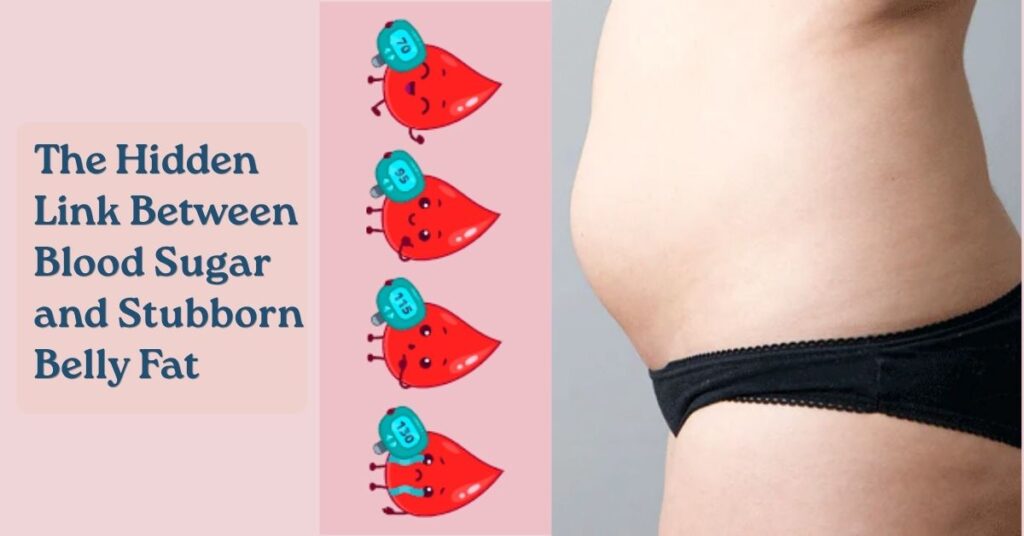
How blood sugar spikes trigger fat storage signals
Every time you eat carbohydrates—whether it is a donut or a bowl of oatmeal—your digestive system breaks them down into glucose (blood sugar). This glucose enters your bloodstream. If the amount of glucose is too high or hits your system too fast, it sends a loud signal to your body: “We have too much energy! Store the extra for later!” Where does it usually store it? Right in your belly.
Why unstable glucose levels slow fat burning
When your blood sugar is constantly bouncing up and down, your body is trapped in a cycle of managing emergencies. It never gets a chance to rest and switch into a “fat-burning” state. If your bloodstream is always flooded with fresh sugar, your body has no reason to tap into your stored belly fat for energy.
The connection between cravings, energy crashes, and belly fat
If you read our guide on constant sugar cravings, you know the drill. A blood sugar spike is always followed by a crash. That crash makes you feel exhausted and triggers intense cravings for more sweets. This cycle forces you to eat more quick-energy foods, continuing the loop that packs on abdominal fat.
The Hormone Problem Most People Don’t Know About
You cannot talk about belly fat without talking about belly fat hormones. The main player here is the hormone that acts as the key to your cells.

How insulin influences belly fat storage
When your blood sugar rises, your pancreas releases a hormone called insulin. Insulin’s job is to unlock your cells so glucose can enter and be used for energy. However, insulin is also your body’s primary “fat storage hormone.” When insulin levels are high in your bloodstream, fat burning completely shuts down.
Why insulin resistance targets the abdominal area first
If you constantly have spikes in blood sugar, your body produces large amounts of insulin to keep up. Over time, your cells get tired of the constant knocking and stop listening to insulin. This is called lower belly fat insulin resistance. Because the cells won’t open, sugar stays in the blood. In a panic, your body produces even more insulin. High levels of insulin specifically drive fat to be stored deep in your abdomen.
The role of stress hormones in belly fat retention
Stress makes this hormone problem even worse. When you are stressed, your body pumps out cortisol. Cortisol signals your liver to release extra sugar into your blood for quick “fight or flight” energy. This causes another insulin spike and, you guessed it, more belly fat.
Lower Belly Fat and Insulin Resistance: What Your Body May Be Telling You
That extra weight isn’t just sitting there; it is actively communicating with the rest of your body.

Why fat around the waist behaves differently from other body fat
Belly fat (specifically visceral fat, which sits deep behind your abdominal wall) is not like the fat on your thighs. It is biologically active. It acts like an organ, pumping out inflammatory chemicals that make it even harder for your body to process blood sugar correctly.
Early metabolic warning signs your body may show
Long before a doctor mentions your blood sugar levels at a checkup, your body drops hints. Expanding waistlines, skin tags, or dark patches of skin around your neck can be early whispers that your cells are becoming resistant to insulin.
Why belly fat can appear before blood sugar problems are diagnosed
Because your body works so hard to keep blood sugar in a safe range by pumping out massive amounts of insulin, your blood tests might look perfectly normal for years. But that high insulin is quietly doing its job: packing away fat around your middle. The belly fat is often the very first visible sign of the struggle happening inside.
Signs Your Belly Fat May Be Linked to Blood Sugar Imbalance
How do you know if your waistline is a calorie problem or a blood sugar problem? Check to see if you experience these common early blood sugar imbalance symptoms:
- [ ] Craving sweets after meals (You need a little something sweet even when you are full)
- [ ] Feeling tired shortly after eating (You need a nap after lunch)
- [ ] Afternoon energy crashes (Hitting a total wall around 3:00 PM)
- [ ] Difficulty losing weight despite effort (The scale won’t move no matter what you try)
- [ ] Brain fog during the day (Struggling to focus or feeling hazy)
- [ ] Hunger returning quickly after meals (Your stomach is growling two hours after breakfast)
If you checked several of these boxes, your stubborn belly fat causes are likely linked to how your body handles glucose.
Why Dieting Alone Often Doesn’t Fix Stubborn Belly Fat
If insulin is blocking you from burning fat, restricting your food isn’t the magic cure.

Calorie restriction vs hormone balance
Cutting calories might make you lose a little weight initially, but if your insulin levels remain high due to what you are eating (like fat-free, high-sugar diet foods), the fat burning will quickly stop. Hormone balance must come before calorie counting.
Why blood sugar stability matters more than eating less
Eating 1,500 calories of processed snacks will keep your insulin high all day, locking your belly fat in place. Eating 1,500 calories of protein, fiber, and healthy fats keeps your blood sugar flat, keeping insulin low and allowing your body to finally burn stored fat. Stability is the secret.
The mistake most weight-loss plans overlook
Most standard diet plans completely ignore the insulin response. They tell you to eat six small meals a day. If those meals contain quick carbs, you are spiking your blood sugar six times a day, keeping the fat-storage gates wide open.
Simple Daily Habits That Support Healthy Blood Sugar and Belly Fat Loss
You don’t need a crash diet. You just need a routine that keeps your internal environment calm.
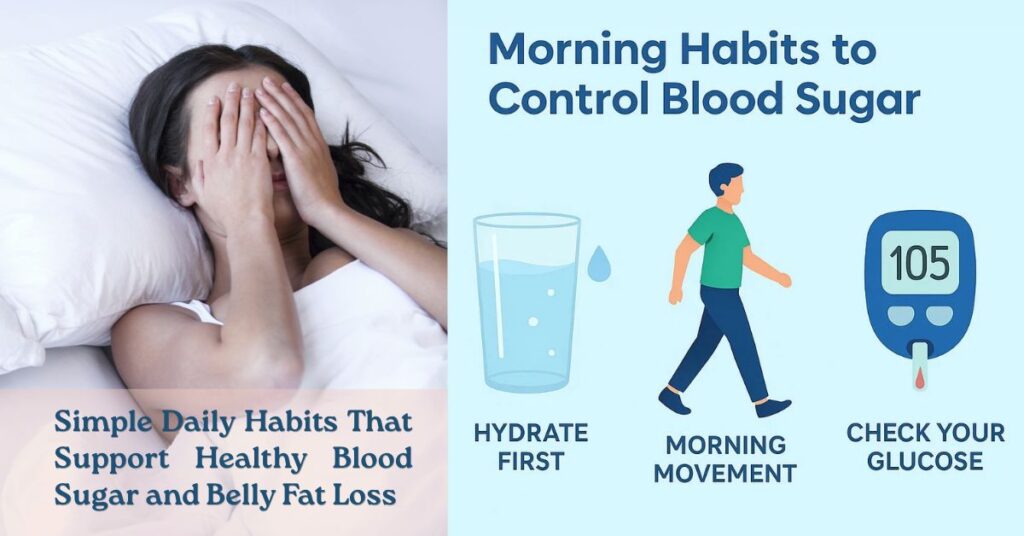
Eating patterns that reduce glucose spikes
Focus on meals that combine protein, healthy fats, and fiber. Never eat “naked carbohydrates” alone. If you want an apple, eat it with almonds. Have your vegetables first, your protein second, and your starches last. This simple sequencing drastically reduces the sugar spike.
Movement habits that improve insulin sensitivity
Your muscles are glucose sponges. Taking a short, 10-minute walk after your largest meal of the day allows your muscles to soak up the sugar in your blood. This prevents the massive spike and the insulin rush that follows.
Sleep and stress effects on abdominal fat storage
Prioritize 7 to 8 hours of sleep. Poor sleep makes your cells instantly more resistant to insulin the next morning. Practice deep breathing or gentle stretching to lower cortisol, reducing the stress hormones that tell your body to hold onto belly fat.
When Stubborn Belly Fat Is a Signal to Support Your Blood Sugar
It is time to stop viewing your belly fat as a failure of willpower. Instead, look at it as a valuable message from your metabolism. Your body is asking for a different kind of support. When you realize the problem is rooted in glucose and insulin, it opens the door to smarter, gentler solutions that focus on balancing your system from the inside out. This is where daily, targeted support can make a massive difference.
How Supporting Blood Sugar Levels May Help Reduce Belly Fat Over Time
When you shift your focus from “losing weight” to “balancing blood sugar,” incredible things start to happen.

Why consistent glucose balance improves fat metabolism
When your blood sugar levels stay steady, your pancreas doesn’t have to flood your system with insulin. With insulin levels low and calm, the biological locks on your fat cells finally open. Your body is given the green light to metabolize and burn that stubborn stored energy.
How steady energy reduces cravings and overeating
Stable glucose means no more afternoon crashes. When you aren’t crashing, you aren’t fighting those powerful, primal urges for cookies or chips. You naturally eat less because your brain finally feels properly fueled.
Why daily metabolic support makes long-term change easier
Creating these habits takes time, which is why many people look for natural ways to support this transition. A high-quality dietary supplement like GlucoBerry can be a helpful addition to a healthy routine. By providing targeted support for your body’s natural blood sugar management systems, it helps make the journey toward a balanced metabolism much smoother.
Who Is Most Likely to Experience Blood Sugar–Related Belly Fat?
This metabolic roadblock can happen to anyone, but certain people are more likely to experience it:

Adults over 35 noticing weight changes
As we age, our cells naturally become a little less sensitive to insulin. What used to work in your twenties suddenly stops working, and the weight settles right around the middle.
People with frequent sugar cravings
If you feel like you need a daily sweet treat to survive the afternoon, your glucose levels are likely on a roller coaster, keeping your fat storage hormones high.
Desk workers with afternoon fatigue patterns
Sitting for long hours means your muscles aren’t soaking up glucose. This leads to tired afternoons, brain fog, and extra abdominal weight.
Anyone struggling with stubborn lower-belly weight
If your arms and legs are relatively slim but your belly feels dense and persistent, it is a classic sign of an insulin-heavy environment.
A Natural Approach Many People Are Exploring for Blood Sugar Support
While changing your diet and taking post-meal walks are crucial, sometimes your body needs an extra layer of natural support to get back on track. This is why many people are incorporating GlucoBerry into their daily routine.

Designed to support the body’s natural ability to flush away excess sugar, GlucoBerry helps maintain metabolic stability. By focusing on keeping blood sugar levels balanced rather than just restricting calories, you provide your body with the gentle, consistent support it needs to naturally reduce cravings, maintain steady energy, and eventually let go of that stubborn weight.
Ready to take control of your blood sugar? Check the latest GlucoBerry reviews and see how it’s designed to support metabolic health from within.
Final Thoughts: Your Belly Fat May Be Trying to Tell You Something Important
That extra weight around your middle is not there because you are lazy or weak. It is a very clear symptom of a deeper metabolic pattern. When your blood sugar is unstable, your hormones signal your body to store fat and hold onto it tightly.
By understanding the connection between glucose, insulin, and your waistline, you can finally stop fighting your own biology. Focus on stabilizing your daily energy with balanced meals, gentle movement, and natural metabolic support. When you give your body the stable environment it is asking for, you can finally turn off the fat-storage alarm, reduce those exhausting cravings, and start seeing the real, lasting changes you deserve.